Restaurateur and Author Molly Irani: Lessons of the Heart and Hospitality

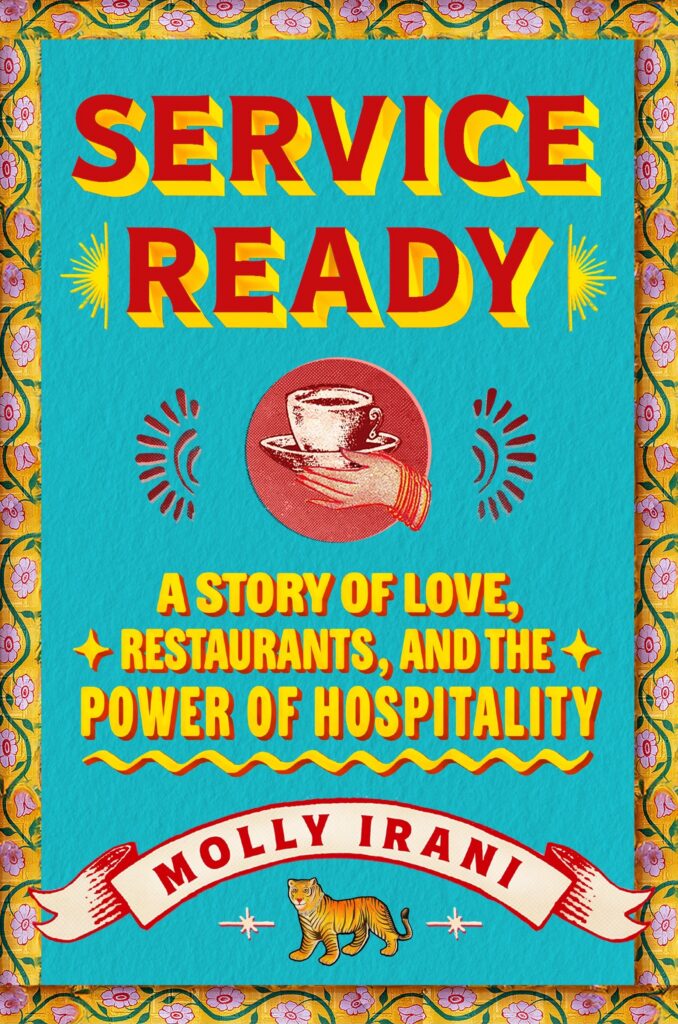
Molly Irani and her husband Chef Meherwan Irani took a chance on a dream idea in the midst of a midlife crisis. Today they are the successful owners of a thriving, James-Beard award winning restaurant that began with the notion of selling Indian street food in Asheville, North Carolina. The couple learned a lot of lessons along the way, building something from the ground up. So Molly wrote a book about it! Service Ready is a story of love, hard work, hospitality, loyalty and following your dreams. There are many lessons within the pages of this book not just for restaurateurs, but anyone looking to build a successful business. We had so many questions when we finished, we went straight to the source and served Molly Irani up some of our own.
One of the things I took away from your book was that you both are great examples of taking chances and doing something different. Meherwan was never a professionally trained chef. Now he’s the chef of a James Beard Award-winning restaurant. And, Molly, you not only went from being a professional organizer to owning a restaurant. You also wrote a book! A really good one at that. What is one lesson you can share with us on taking a chance and believing in yourself?
Thank you for that sweet note about my book! The lesson for us throughout this whole restaurant adventure is the discovery that the largest barriers that exist between us and our dreams is our own willingness to just start. The more we can move in the direction of our dreams, take risks, work really hard at accomplishing the goals, and learn from our mistakes, the closer we get to manifesting our dreams. For us, it didn’t happen overnight. When I was younger I thought that the people who had “found their thing” were just lucky. Then we found ourselves in the middle of a mid-life crisis, risking everything to follow a dream. And I discovered that luck has very little to do with it. It turns out that taking a chance on yourself and believing in yourself are just the first important steps. The rest of finding or building your “thing” looks a lot like hard work. But you don’t mind doing it because you’re doing the thing that makes you feel most alive! It’s a real gift to get to feel alive in and engaged by the work we choose to do.
I think if we look at statistics, the amount of restaurants that survive and thrive are few and far between. And the percentage of married couples who do this together is even less. How did you two beat the odds and have both a successful restaurant and marriage? Any tips you can share?
There’s so much to say about this that I had to write a whole book about it! But I think the main thing is to know going into it is that it’s not the easiest thing in the world–but that it can be deeply rewarding if you devote yourself to figuring it out and finding your honest “yes” in the work. Running restaurants successfully and having a happy marriage as business partners both take a lot of care and intention. But just like love, when you get bitten by that bug you’ll do just about anything to follow its powerful pull. Love makes us do crazy things! Also, some of the best things. That love can be the motivation it takes to stretch for the dedication and work involved in getting restaurants and a marriage to flow well. We had to walk through fire to do that work for each other. It took us years of hard (ongoing!) conversations, and ultimately learning how to celebrate and lean in to each other’s differences. We also learned to not both try to drive the boat at the same time. We divided our roles carefully and then tried to stick to our own lanes.
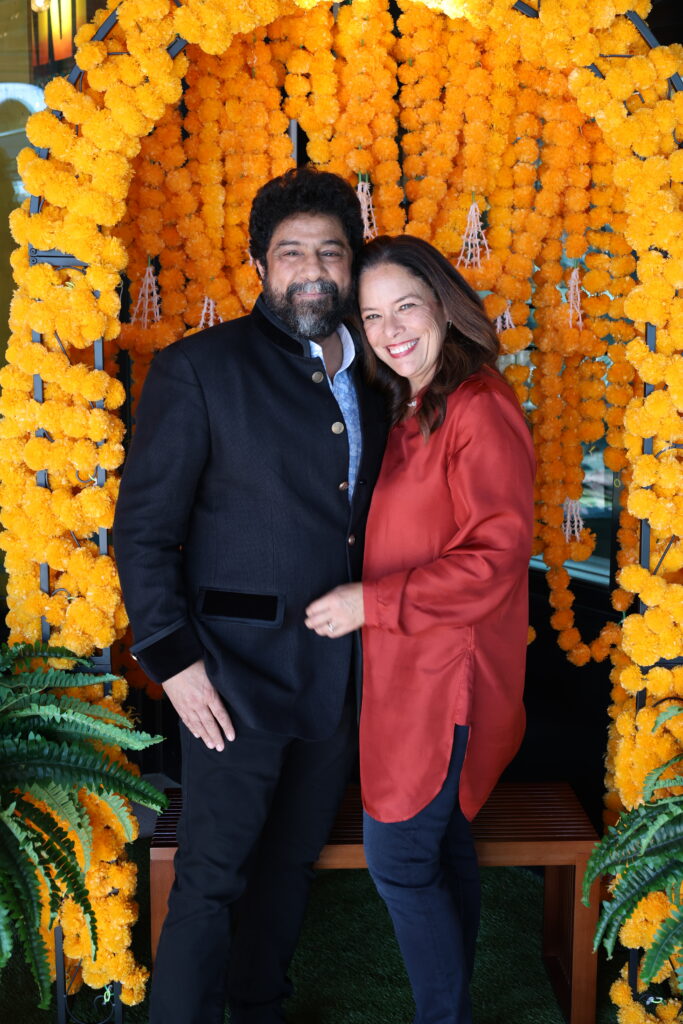
Meherwan and Molly Irani. (Photo: Molly Milroy)
Molly, there are so many life lessons in your book that can be applied to many things, not just opening a restaurant. What was the impetus to writing this story? What did you hope to share with readers?
I wrote the book that I felt I needed when I was learning how to lead people, run a start-up business with scarce resources, find my strength as a female leader in a male dominated space, and become a successful entrepreneur. Our industry is evolving and moving away from past reliance on top down command and control and toxic work environments. We set out to build a different kind of business, and along the way we landed on some practices that worked well for us. Strategies that built a strong business culture–one that fosters grit within teams, the necessary element to carry a business through whatever the world throws at it (pandemics, floods, recessions, etc!). I truly believe that rising tides lift all boats, so I wanted to share what we’ve learned along the way. Many people shared generously with us to help us when we had no idea what we were doing. My goal with this book is to pay that forward. And to celebrate the crew that helped us build something really special.
I also felt that our version of opening a restaurant–the messy, bootstrapped, learn-as-you-go approach is unfolding all over the world every day in our industry but it hasn’t been represented much in print. I wanted the world to know more about our industry and the gifts that it has to offer. Restaurant operators develop a strong muscle of resilience. We’re forced to master resilience just to run the wild ride of service well. Doing that with grace and care for each other, ourselves, and our guests is an art form. I believe it’s one of the most beautiful and inspiring qualities of our industry, and something the world would benefit to learn from.
What do you tell people who might come to you with the notion of opening a restaurant?
There will be times that things–and sometimes seemingly everything–falls apart. Our greatest learnings came from some of our hardest challenges. The struggle can grow you if you do the hard work to learn from it. From that growth you can make it through. The win is to learn to see the challenges through that lens rather than run away from them.
Looking back, was there a moment where you both looked at each other and thought, “What are we doing?” Indian street food in a place like Asheville, North Carolina was certainly something most would consider bold and risky.
Literally from the very beginning I thought we were nuts. But I also thought that it’s hard to create anything great without being a little nuts. People don’t disrupt the status quo by coloring inside the lines drawn by others. Making an impact, creating something unique, or creating art of any kind that moves people usually involves being bold and taking risks.
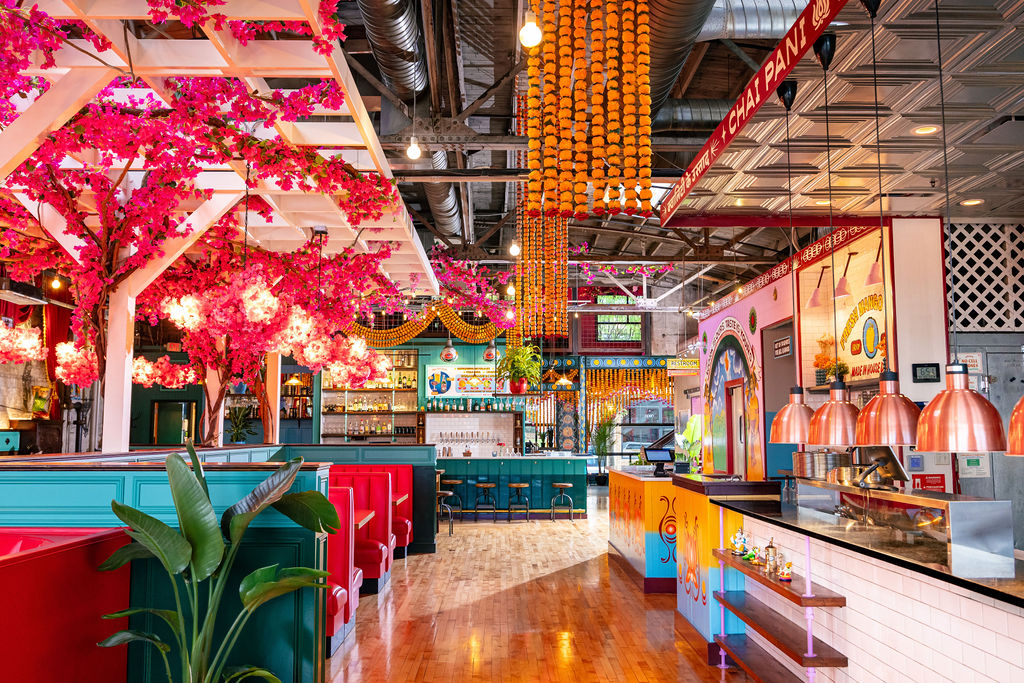
The original Chai Pani, Asheville, NC. (Photo: Tim Robison)
I love the story of the cash register breaking down on opening day and the whole concept of “jugaad” to pivot and think outside the box. I think everyone can learn a lesson there. Can you tell us how this almost nightmare of a situation turned into a pillar of your business ethos today?
Our business was built on a foundation of Jugaad. Jugaad is a term used throughout India to describe a way of making do with what you have by relying on creativity or ingenuity instead of waiting around to have all the pieces in place. It’s a way of “MacGyvering” your way through. We started that way because we didn’t have the resources to do it any other way. The story about the register not working on day one was just the beginning. What we learned along the way is that the training this gave us was actually an essential teacher in how to give a challenge the oxygen and energy needed to make it work without just throwing money at it. That learning ultimately helped us not only navigate through many hard times, it also led to a better result–one where the solutions are unique and tailored, not just a bandaid solution. This practice led us to discover better solutions and ideas, creating a more interesting product.
I’m curious. You had a small, core group that you started out with and you really made them a part of your team. Are they all still part of the team today?
One of the most rewarding parts of this adventure for us has been the collective of incredible people who’ve joined us. Our success is because of them and the work culture we built together. Many people have stuck with us from the first year and have grown thriving careers along the way. Daniel Peach was one of our very first hires when he started at age 19. He’s now our culinary director. Our company’s COO, Charlotte Stack, started as a server when she was 21. The OG crew which includes Isaac, Mikey, Gustavo, and James, helped us create some real magic in our workplace–and that over time attracted many more amazing people. Collectively, they now run our growing company.
I really enjoyed how open and honest you are in the book about the struggles you faced both financially and personally as a couple. I think it’s a must-read for any couple embarking on this journey themselves. What was your hope in sharing your story?
Representation is really important. When we see our story reflected in someone else’s it helps us feel less alone and see paths through the struggles. It wasn’t easy to share all the true messy parts, but I believe that it matters. Being an entrepreneur can be a lonely and vulnerable experience, but the remedy to that is community. The more honest we are in building a community, the stronger it becomes.
What is the hardest thing about running a restaurant? Conversely, what is the most rewarding aspect?
One of the biggest challenges is landing on a successful financial model for your particular restaurant. Our industry faces many obstacles in that process: rising cost of goods, impacts of climate change, a model based on tipping and all the challenges with that, and a transient work force. Mastering your financial model is no easy feat, but everything is figureoutable if you put in the work. However, the rewards are beyond measure when you crack that code. The secret I think many people don’t know about this industry is how much fun it can be. Working with a solid crew that has your back, bringing joy to guests, feeling the creative spark through the love of cooking or service is a wild ride that can be addictive in the best kind of way.
Can you tell us what’s on the horizon today for the business? Will you continue with expansions?
We’re currently growing our Botiwalla fast casual brand. We just opened a location in Raleigh and have one opening end of summer in DC. Spicewalla continues to flourish and will be opening more retail locations soon. And we have lots of fun adventures this year. My book tour continues, Meherwan launches a cookbook in September, and more fun creative projects to come!
If I’m trying Indian street food for the first time, what do you suggest I order at Chai Pani?
Okra fries! It’s how my mother-in-law got her kids to eat their vegetables, and along the way she created a cult following for this crave worthy snack!
AUTHOR

Elizabeth Hazard is a writer, producer and photography editor. Her work has appeared in various publications and she writes frequently about art, culture, fashion and history.

NEXT ON THE DISH