Gardar Stefansson, CEO & Co-Founder of GOOD GOOD, has a simple dream. That one day, a kid’s first choice will be to grab a jar of GOOD GOOD jam from the fridge without caring that it has no added sugar. It’ll be like any other jam on the market and part of their family’s food-shop list. That may seem grandiose for some, but it’s an Icelandic-founded brand that knows a thing or two about grit. What started small has landed products in over 10,000 stores worldwide, and the team is just getting started.
Beyondish spoke with Stefansson about GOOD GOOD’s latest Mango Habanero Jam launch, how his toughest critics (his children) shape product launches, and why it was so important for him to become a part of the Texas community where he is now based.
First off, congratulations on the launch of the Mango Habanero Jam! We’ll dive into that in a bit, but I want to start with your origin story. You studied in Denmark and launched two salt companies in Iceland before GOOD GOOD. Tell me more.
I’ve always been passionate about two things: making food and doing something great with nature. Growing up in Reykjavik, you’re surrounded by both. I studied economics at the University of Iceland, which gave me the business foundation. Then I went to Aarhus University in Denmark for a Master’s in Experience Economy, and that’s where it clicked for me. Food isn’t just a product; it’s a story, a place, a feeling. When I came home to Iceland, I saw something nobody was using properly: the geothermal heat under our feet and the clean North Atlantic Ocean around us. I co-founded Saltverk and then Norður Salt, making sea salt the way Icelanders did centuries ago, with geothermal energy doing the heavy lifting.
So that began your start in the food business?
That’s where I learned food entrepreneurship the hard way: production, packaging, pricing, getting onto a shelf and staying there. Then in 2015, my co-founders Agnar, Jóhann and I started talking about a no-added-sugar jam. Most people thought going from salt to jam was a strange move. I didn’t.
And your takeaways you applied to running GOOD GOOD?
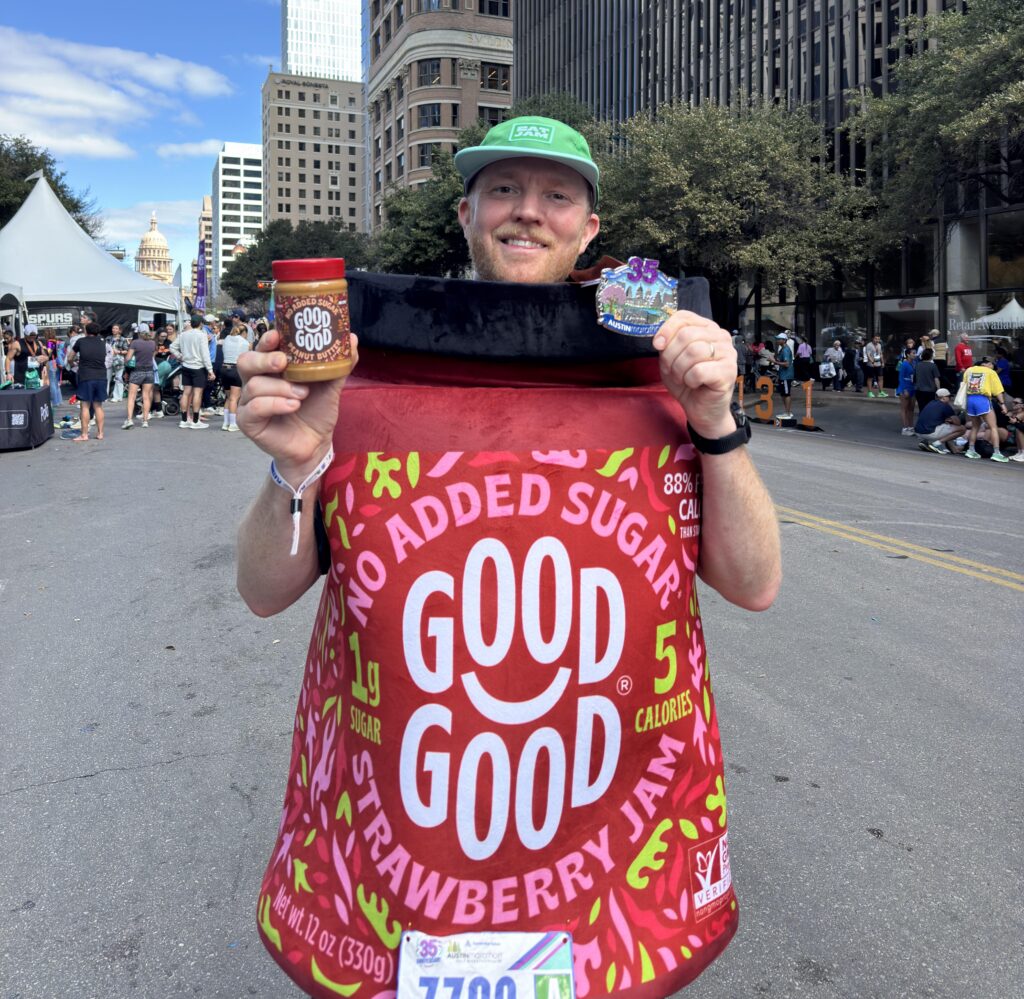
Three things. First, the product has to be great and solve a real problem. Beautiful branding brings people in the first time. The product brings them back. Second, origin is a real advantage. People care about where their food comes from and Iceland gave us a story nobody else could tell. Third, building a food brand is a marathon, and I mean that literally since I’ve run one in a GOOD GOOD jar suit. There are always setbacks: supply chain problems, retailer rejections, recipe iterations. You stay focused on the long-term vision and solve one problem at a time. With salt, we learned how slow it is to build a category from scratch. With GOOD GOOD, we went after a huge existing category, jam, and fixed its biggest problem: sugar.
I loved reading about the brand’s start. Tell me a bit more about what it was like being in the kitchen creating your first product before launch.
Messy. Very messy. This wasn’t just a business idea for me; it was personal. My aunt has type 1 diabetes and our family saw firsthand how frustrating it was that healthier options always meant compromising on taste. The first recipes were made in my own kitchen in Iceland, and most of them weren’t good. Stevia is wonderful, but it has an aftertaste, and getting rid of it took hundreds, then thousands, of iterations. The breakthrough was letting the fruit lead and using the sweetener only to support it. My aunt was our first real customer and our toughest taste tester. If she wasn’t excited, we weren’t done.
That personal touch really shaped the brand into what we see today.
What we learned is that a jam that works for someone with diabetes also works for everyone who simply wants less sugar: parents, athletes, people cutting back on sugar or just eating better. We never set out to make a “diabetic product.” We set out to make a great jam that happens to have no added sugar. That became the whole brand promise: no added sugar, no compromise on taste. Every jar still has to pass that test.
Before launching new products, your children also try out the prototypes. What Icelandic grit have you taught them, and how does that translate to your community and brand?
My kids are my harshest critics. If they don’t finish the tester, the recipe isn’t done. The principle I teach them most is áfram gakk. It means “keep walking.” When something goes wrong, you don’t stop and complain. You keep moving forward. The other lesson is simple: show up even when the weather is bad. In Iceland, you don’t cancel plans because of the wind or you’d never do anything. That’s how we run GOOD GOOD. At Expo West one year, our samples got stuck on the other side of the country. So we drove across Los Angeles, bought our own jars off store shelves, and were ready 15 minutes before the doors opened. Building a brand is full of moments like that—Áfram gakk.
Naturally, I want to talk about your latest launch—the Mango Habanero Jam. What inspired you to launch this flavor?
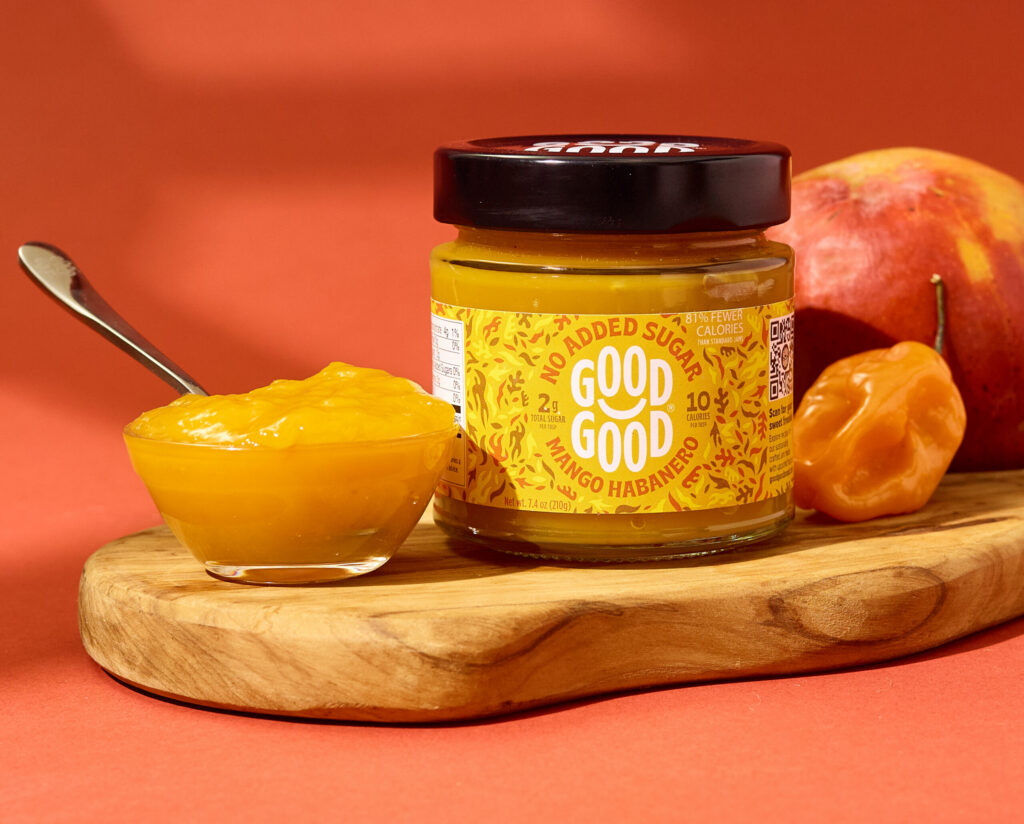
Americans taught us “swicy” (sweeet and spicy). Sweet heat is everywhere here: wings, glazes, charcuterie boards, on cream cheese and crackers at every tailgate. But almost every sweet-heat product is loaded with sugar. That was our opening. Mango brings the natural sweetness and habanero brings the kick. The result is a jam with 81% less sugar than traditional jam and just 10 calories per serving.
GOOD GOOD is an Icelandic brand, but as you continue to grow in the States, it’s admirable that your team is partnering with local farmers. What sparked the partnership with Sanchez Farms?
Sanchez Farms happened by chance. We met the family at the Poteet Strawberry Festival and they told us their story: how they farm, what they grow, and what it takes to do it right in Texas. We wanted Texas-grown habaneros because Texas is home now, and when you know the family behind the peppers, the product means more.
I saw the video of you eating the habanero at Sanchez Farms!
Yes, I ate a habanero straight off the plant. I don’t recommend it. It did confirm we had the right pepper.
You guys are doing a lot of fun things in your community. This year, GOOD GOOD was the Official Jam of the Austin Marathon. You also popped up at Blues on the Green and sponsored Club Paddle. Your roots will always be Icelandic, but how has getting involved with your community helped with your transition?
It made Austin feel like home, fast. When you move a company from a country of under 400,000 into the U.S., you can either stay on the sidelines or become part of the community. Being the Official Jam of the Austin Marathon and handing out GOOD GOOD Goodie Bags brought us face-to-face with the people who actually buy our jars. I’ve run a full marathon in a GOOD GOOD jam jar suit, so the marathon partnership is personal for me, and we’re excited to be partnering with them again in 2027. For us, this isn’t marketing. It’s how we get to know our customers. Austin rewards people who show up, and Icelanders are good at showing up.
What has been the hardest part about being an Icelandic business growing in the States?
Everything runs at a different size: the retailers, the distances, the logistics, the competition, and the cost of getting it wrong. You can’t learn American retail from a distance. You have to be here, in the stores and in front of the buyers, and that’s a big reason I moved my family to Austin.
Sustainability has been a through line in the businesses you’ve created. Was that a conscious thought when you started, or was it more a product of your environment and natural way of life in Iceland?
A bit of both, but it started with Iceland. You grow up surrounded by nature that is powerful and fragile at the same time: glaciers, volcanoes, the ocean. Sustainability isn’t a trend there. You don’t waste things and you don’t take nature for granted. With salt, using geothermal heat wasn’t a marketing idea; it was the obvious way to do it. With GOOD GOOD, we made it deliberate from the start because I believe long-term success and responsible business go together. As I’ve said before, small actions don’t move mountains on their own, but they start chain reactions.
Almost three years later, how has GOOD GOOD’s sustainability initiative evolved?
In 2023, we launched three pillars of our sustainability initiative: food donations, reforestation, and food safety. Reforestation is the one I’m proudest of. We partnered with the Dollar Donation Club and Trees for the Future on their Forest Garden project in Sub-Saharan Africa. For every bundle bought on our website, we donate a dollar, and every dollar plants about four trees. When we launched the bundle, we’d planted a few hundred trees. Today, we’ve planted 25,246 trees in restored forests. My long-term dream is to plant a GOOD GOOD forest in Iceland, too. Alongside that, we’ve donated around 50,000 pounds of food to families facing food insecurity across the U.S., Canada, Europe and the UK, and we hold ourselves to strict BRCGS food safety standards. The biggest change since 2023 is that sustainability is no longer a separate project. It’s part of how we make everyday decisions about ingredients, sourcing, packaging and transport.
So how and where can folks jump on the GOOD GOOD bandwagon?
We now have 26 products, all with no added sugar. We have a wide variety of jams and jellies, fruit spreads, fruit butters, a vegan lemon curd, chocolate spreads and peanut butters. In the U.S., you’ll find us at Walmart, H‑E‑B, Whole Foods Market and many independent retailers, as well as Amazon and goodgoodbrand.com. Globally, we’re in more than 14,000 stores across 36 countries. Mango Habanero is the start of a new direction for us: bold flavors made for cooking and hosting, not just toast.
AUTHOR

Allanah Dykes is a freelance writer whose niche is home decor and food, but she has written in almost every field from mental health to political op-eds. Her favorite pastimes are listening to Biggie and Bach and enjoying New York Italian ices and slices

NEXT ON THE DISH