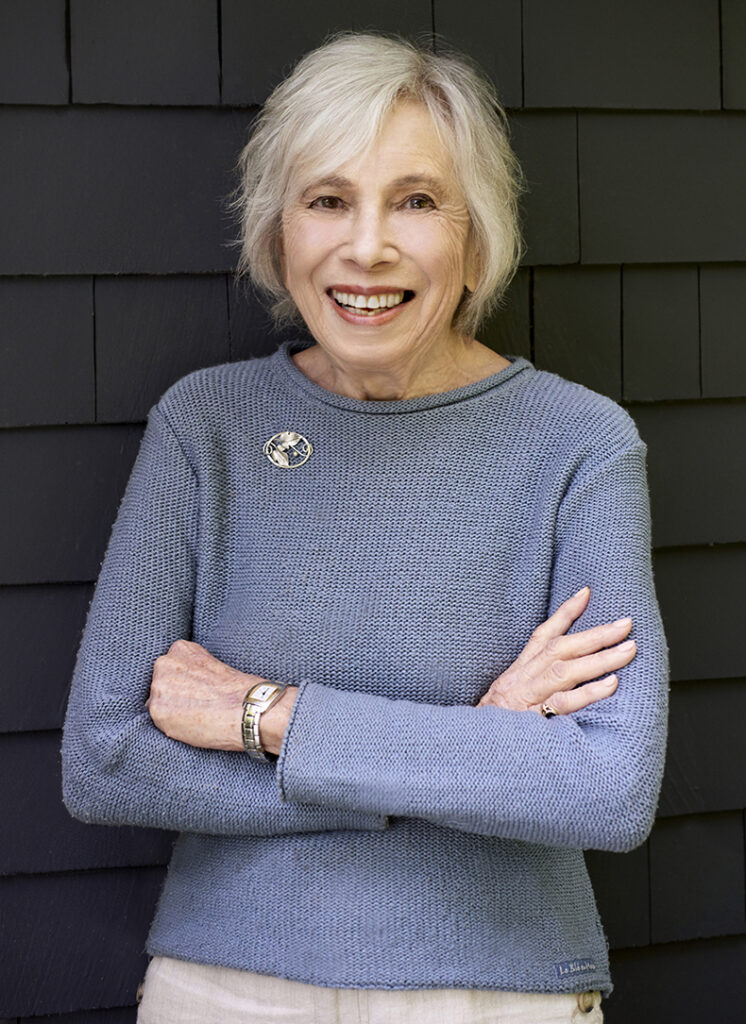
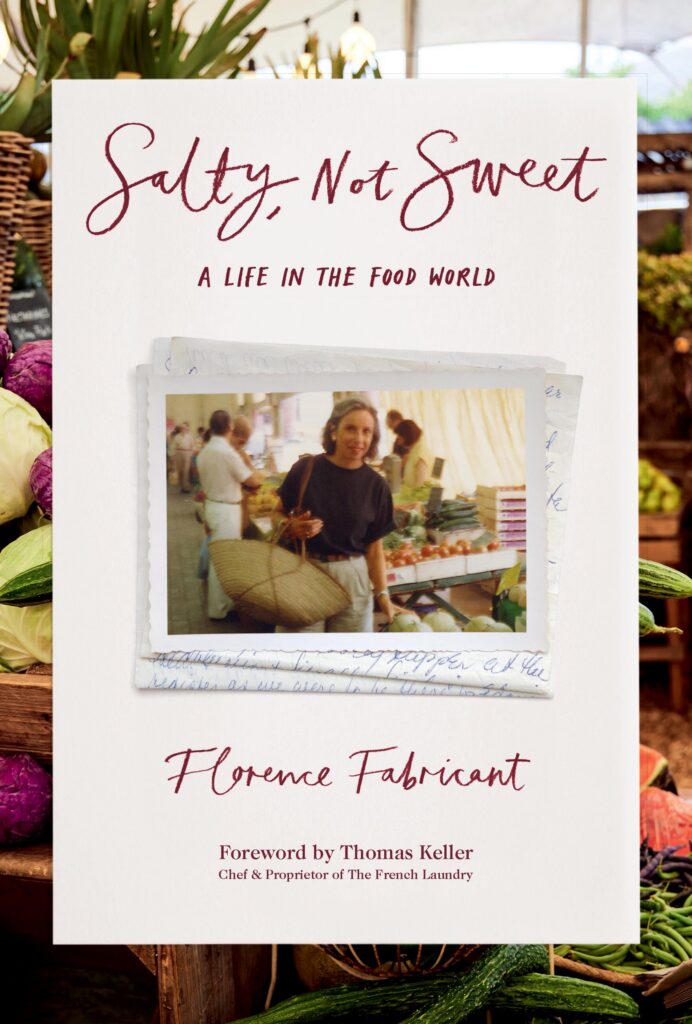
Food writer extraordinaire Florence Fabricant has the rare gift of crafting words together like a chef mixes and melds ingredients for the finest of recipes. Her writing masterfully brings the tastes and smells of dishes to life before us; painting the perfect scenes of dinner tables, five-star restaurants, inside kitchens, alongside master chefs, deli counters, farmers markets and more. Her world has been filled with tasteful encounters and she writes prolifically about them. A longtime contributor to The New York Times and author of 13 cookbooks, Fabricant is a well-respected food writer with a palate for fine food, travel and talent in the kitchen. Spending a career discovering and covering restaurants, chefs, dishes, food culture, movements and more, Fabricant turns the table on herself. In her recently published memoir, Salty, Not Sweet, Fabricant dishes up delectable, personal anecdotes from her first food memories to her travels around the world.
First off, congrats on the publication! Your book is so deliciously written. Your words create vivid, mouthwatering scenes that make the reader feel as if they’re in the places you write about tasting those foods, whether it’s a kosher pickle in the Bronx or a ripe tomato on brioche. How did you decide on the stories you wanted to share in Salty, Not Sweet?
Thank you for your lovely appreciation. When I finally began to write the memoir it was not with a checklist of anecdotes, incidents and such that I planned to include. It was more organic than that. I started writing and the memories just came to me. Then I would recall stuff I hadn’t included and go back and add, then rewrite. I still remember things I didn’t include – too late! My kids even bring up incidents they recall. I did mainly try to incorporate the stories that related to food and restaurants and my career. That’s why I left out the memory of the honeymoon in Haiti and the MAD Magazine “convention” being held at the hotel where we were staying. My kids still remember my telling them about it. The MAD people kept trying so hard to be funny at dinner and they weren’t funny at all. THAT was hilarious! But it wasn’t really relevant, so I left it out.
Thomas Keller wrote the introduction to your book. This is a full circle moment of sorts. I read that in 1986 you asked if you could write about him before anybody else did. What was it like seeing his success, along with others you’ve discovered? Can you tell us about your instinct for talented chefs and delicious dishes?
Wait wait! I did not ask his permission to profile him in 1986. I told him it was what I was going to do. Frankly, had I not written about him when I did, then sooner rather than later someone else would. Seeing his success certainly validated my judgment. My instinct for talent, like appreciating Nobu early on or welcoming the change at Le Grand Véfour when Guy Martin stepped in, has to do with my experience over the years and how well I understood the territory to enable me to see a positive change, evidence of talent and so forth. It often has to do with context, something that many young writers on the food scene today can’t establish because they’re too invested merely in visuals. I can appreciate originality, not just copycat attempts or badly conceived though perhaps unusual or IG-ready novelties. Also I have a damn fine palate.
You’ve written about food and the food industry for years. How was it different in approaching the task of writing a memoir?
My coverage wasn’t personal. It was reporting, factual, accurate at best. The memoir is completely personal, braided throughout with tidbits of fact, but personal all the same. Sort of like reporting about myself. The decision to write it was spurred by my conversation with Thomas Keller followed by the positive response I got from the agent I approached, then my publisher. And once it was a done deal, I plunged ahead.
I’m curious, what are your thoughts on today’s concept of food media, with countless food influencers out there?
You can’t put the genie back into the bottle. But so much of what’s observed and posted (not really reported) is frivolous, designed to grab attention, then disappear like the moist whisps left after the cotton candy has been consumed. Meaningless. Almost no research, understanding and so forth. Also consider all the self-promoting people who write long-winded blogs about how they decided what to buy at a market or what to wear to a party or where to have dinner and what they ordered and go on and on about it. Who has time to read this stuff, and who cares anyway? It might satisfy the writer but I’m too busy to be bothered by most of this. I prefer writing that informs or really amuses or awes because of the craft. There’s very little of this. Too much pointless navel-gazing even if it might generate income.
How have you seen things change? And for better or worse?
There has been such an increased openness about food, exponential improvement in the quality of ingredients, concern about the environment, working conditions and so forth, all worth applauding. But on the negative side are issues like most fish farming, industrial agriculture, big food, inadequate response to hunger, and silly fads. And an overload of information. The minute a restaurant concocts a new cheesecake flavor there’s a publicist out to promote it. Numbing. Like the endless though perhaps lucrative collaborations, one-night stands. Tiresome. Enough already. Let’s just have a good dinner. And don’t get me started on the whole reservation circus!
Your In Season column really played a pivotal role in the whole concept of farm to table. Do you think it’s still important today? Have we made progress? Where has it fallen short?
Farm-to-table is of paramount importance today and influences many chefs, restaurant companies and food choices. I think anointing my original column with a “pivotal role” is an overstatement. It was gathering steam. It remains a practical and noble effort but won’t solve the problem of hunger and malnutrition in many parts of the planet. Too many chefs just give it lip service, like the ones who preach it in the Hamptons where I have lived for a good part of my life yet they don’t serve local fish like porgies, bluefish and whiting, A porgy is a sea bream is an orata after all. But they’re selecting branzino and salmon instead. Part of it has to do with consumers who can’t be budged from their appetite for strawberries in December and salmon 24/7.
In your opinion, what is the city with the best food scene?
New York.
Do you have a favorite restaurant or dish? When you’re craving something, what is your go-to order?
I don’t have a favorite restaurant. But I’ll go for good whole-grain sourdough bread and soft butter anytime.
And I know you’re an accomplished cook yourself. Do you have a favorite meal that you like to make for guests?
I prefer seasonal, of course, but my method of preparing magret de canard (duck breasts) makes it compelling for entertaining. You sear them, make some kind of sauce or condiment in advance. Then do absolutely nothing for 90 minutes and they’re ready to slice and serve. What better way to suit a host? I also love serving paella. Good for a crowd with the proper pan and once it’s done it has to rest for at least 15 minutes and is an easy reheat, enhancing the socarrat. My two tips for entertaining are first to make sure the dishwasher is empty and second, in cold weather put your coats on the bed and leave the front closet empty for guests.
Why do you think that food has such a resounding pull to our senses and emotions? Can you share a memory with us that maybe didn’t make it in your memoir?
Food, good or bad, is an essential part of life. There was the one memory, above, about MAD Magazine. Another, in Italy, in Southern Tuscany, after having spent the morning exploring the Etruscan tombs at Cerveteri we started driving toward Orvieto but needed someplace for lunch. The guidebooks didn’t help but as we drove along, we noticed a small sign that announced “vino” down a short road toward a building with some tables under an awning, vineyards beyond. We decided to give it a shot. It turned out to be a delightfully satisfying interlude of homemade charcuterie, pasta with olive oil and herbs, then fragrant ripe peaches and cheese, some sort of pecorino. Nameless white wine, probably vermentino, was poured from repurposed San Pellegrino bottles. Keep an open mind; you never know!
Is there a meal or place you’d still like to discover and write about?
Australia.
What sets a good food reporter and writer apart?
Good, original writing and an open mind.
What’s the most important ingredient to make a meal special?
The others at the table.
AUTHOR

Elizabeth Hazard is a writer, producer and photography editor. Her work has appeared in various publications and she writes frequently about art, culture, fashion and history.

NEXT ON THE DISH