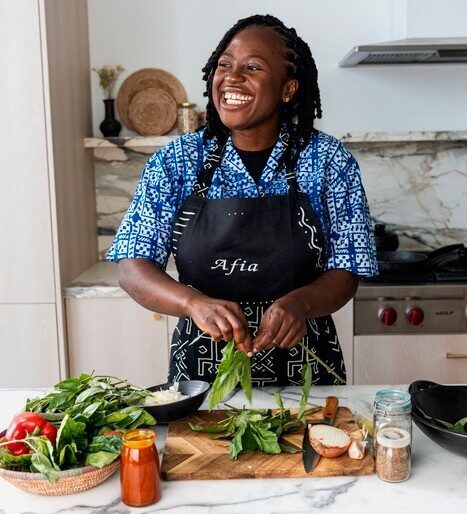
When Afia Amoako, the creator of Eat with Afia, started writing her debut cookbook, she wanted to blend culinary tradition with cultural and historical insight. Exploring topics like climate change, indigenous ingredients, globalization, and food history allowed her to create a body of work that not only educates readers about Ghana and West Africa, but also allows her to share with her community of over 300,000 followers how her culinary upbringing shaped her life and her family’s food history.
Beyondish spoke with Amoako about her journey to creating Eat with Afia, which features more than 100 plant-based Ghanaian recipes, with 60 per cent of them traditional and unmodified, and how food became the most powerful vessel to maintain her Ghanaian roots.
You lived in Ghana for the first ten years of your life before moving to Tanzania and later South Africa. After high school in the U.S., you studied immunology at the University of Toronto and later earned a Master’s degree in Public Health from McGill University. How did you stay connected to your Asante culture while moving around so much?
I think it starts with my name. I have a very traditional Asante name, one I was given as a girl born on a Friday and a family name that is a bit unique. Therefore, irrespective of where I went, the name was such a defining factor that tied me to my culture, especially as I did not have any Western names like my peers. So even with years away from home, living at boarding school in the US, the one thing I knew I had to remind me of where I came from was my name. Moving to Canada was an opportunity for me to rebuild those cultural ties now that my family was all in one location. Given that Toronto is a multicultural city with a thriving Ghanaian immigrant community, I felt I was able to maintain some connection to my culture, whether that is speaking Twi (our traditional language) at home, having access to our traditional meals, or building friendships with other Ghanaians.
Did you ever struggle with maintaining that connection to your community or feel as though you were losing it?
As many immigrants can attest, there is always the question of how much is lost once you spend so much time outside of your home country. For me, that worry came from time to time, especially when I decided to adopt a plant-based diet, but it equally served as a motivator to continue to nurture my connection with my culture. Because of this distance from home, I became even more interested in Asante culture, with the intention of filling in the gaps I am missing from being away. And in doing so, I personally feel like I maintained a strong bond with my culture.
Your cookbook opens with memories of your time in Ghana, and how food connected you to the people around you while shaping your understanding of culture and community. Can you share one of your earliest memories of being in the kitchen?
The kitchen has always been the focal point for a lot of our family life. When we are back in Ghana we sit with our relatives and guests in the kitchen more often than we do in the family room. My earliest memories surround my mother’s brothers in our kitchen, eating fufu together and sharing stories about their childhood, with details about our culture and history woven into these personal stories. There would always be a lot of laughter and a lot of stories being shared, and it is one of my favorite childhood memories. It really centralised the importance of food in gathering as a family. Even as an adult, I still find myself being a student around my elders, especially as I am still learning my mother tongue and continuing to uncover more about our family history. These experiences make it easier for me to absorb a lot of information and share it with my audience.
Your recipes include photos that show the cooking process. In an Instagram video, you said that you wanted to communicate the sensory experience of Ghanaian cooking. Can you share a bit more about why this was so important for you?
There are two major reasons I wanted to highlight the expansive sensory experience of cooking. The first is to highlight how cooking can truly be an opportunity to engage with the experience and be fully present. When we use our hands to mix the dough, feel the texture or portion out the right amount of fufu, it will help us understand the food a lot better—what it’s supposed to feel like, smell like and taste like. While the cookbook does provide measurements for people to follow, highlighting color, texture, and smell is meant to encourage people to think about the recipes beyond a set of steps and actually understand what is going on. This makes it easier to troubleshoot if something goes wrong and teaches how to cook with some intuition, bringing back some of those cooking processes our elders followed that did not require exact measurements.
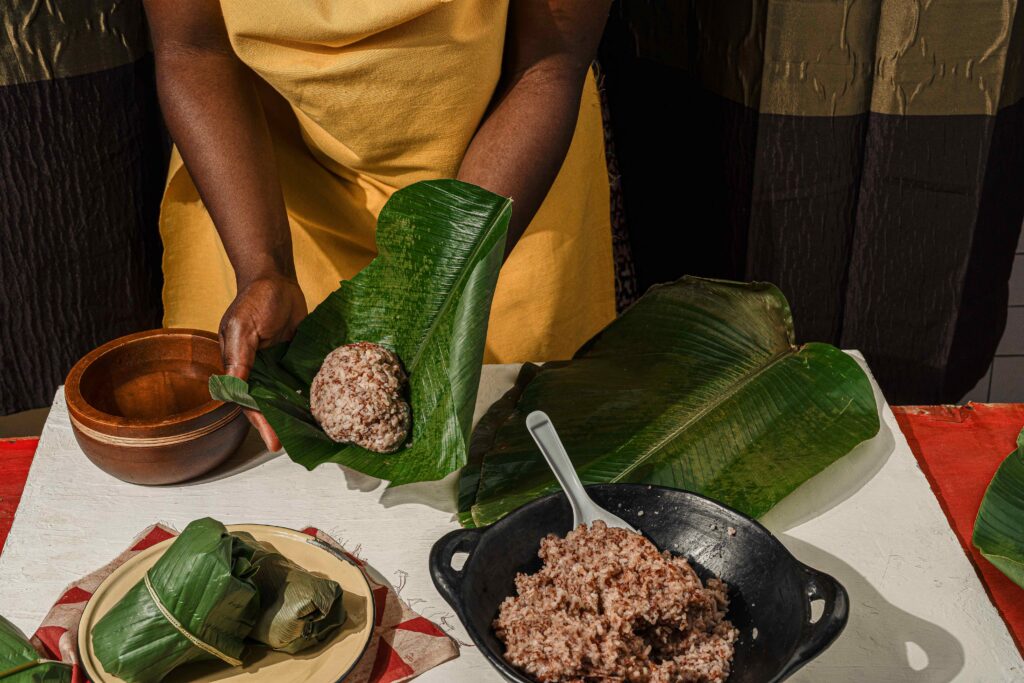
Preparing Omo Tuo (rice balls). Photo: Courtesy of Penguin Random House
And the second reason?
I was very intentional with the use of hands because of the pushback many non-Western cultures get about using hands in the cooking process. With beautifully captured photos and recipe instructions that highlight texture, I wanted to underscore how vital hands can be. Clean hands are necessary for the preparation of fermented food and the consumption of food like fufu, which will be challenging to replicate fully with utensils. Hands have a lot of utility in the cooking process, and it was vital for me to underscore this.
When you first set out to write this book, how did you decide to structure the chapters?
It was not easy, because Ghanaian foods do not operate under the same structure as many Western cuisines. All meals can qualify as breakfast, lunch, and dinner. The categories of our meals differ, with stews, soups, starches, drinks, legumes and porridges serving as important components. But what one ethnic group values as essential foods, another might feel otherwise. In short, it was incredibly challenging to organize the book in the beginning. But I took a step back and started with the foundations and built my way up; this is why the pantry section is quite extensive. Breaking down the major ingredient groups helped me work through the food processing chapter, which made it easier to put the other recipes into different groups, with groups not only centered on commonalities like soups or rice-based dishes, but also cultural significance.
There are so many pockets of this cookbook that showcase the extra care you took for readers who may be learning about Ghanaian and West African culture for the first time, as well as those looking to expand their knowledge.
Beyond serving as an opportunity to share my family story through food, I wrote this cookbook as a reference for people interested in understanding the foundations of Ghanaian cooking. This goal dictated how I expanded on topics in the book, including detailed information on ingredients, different languages used to refer to the same ingredients, and the short essays that provide information on the science or history of the ingredients. This helps to showcase and highlight how food is an important extension of the diverse cultures that call Ghana home.
How did you decide which recipes to include?
I started with the popular recipes that people would recognize as Ghanaian cooking. But after I travelled across the country, I wanted to include recipes that highlight the importance of indigenous ingredients in our cooking and showcase the diversity of our culinary traditions. With this in mind, I made sure to include two versions of jollof rice, waakye, groundnut soup and melon seed soup—versions that highlighted differences between southern and northern Ghanaian preparations of the same ingredient because of the diversity of culinary traditions or versions that speak to the history and evolution of recipes. With the goal of highlighting the foundation of Ghanaian cooking as a product of millennia of history, culture and agricultural science, I used that to guide the selection of recipes.

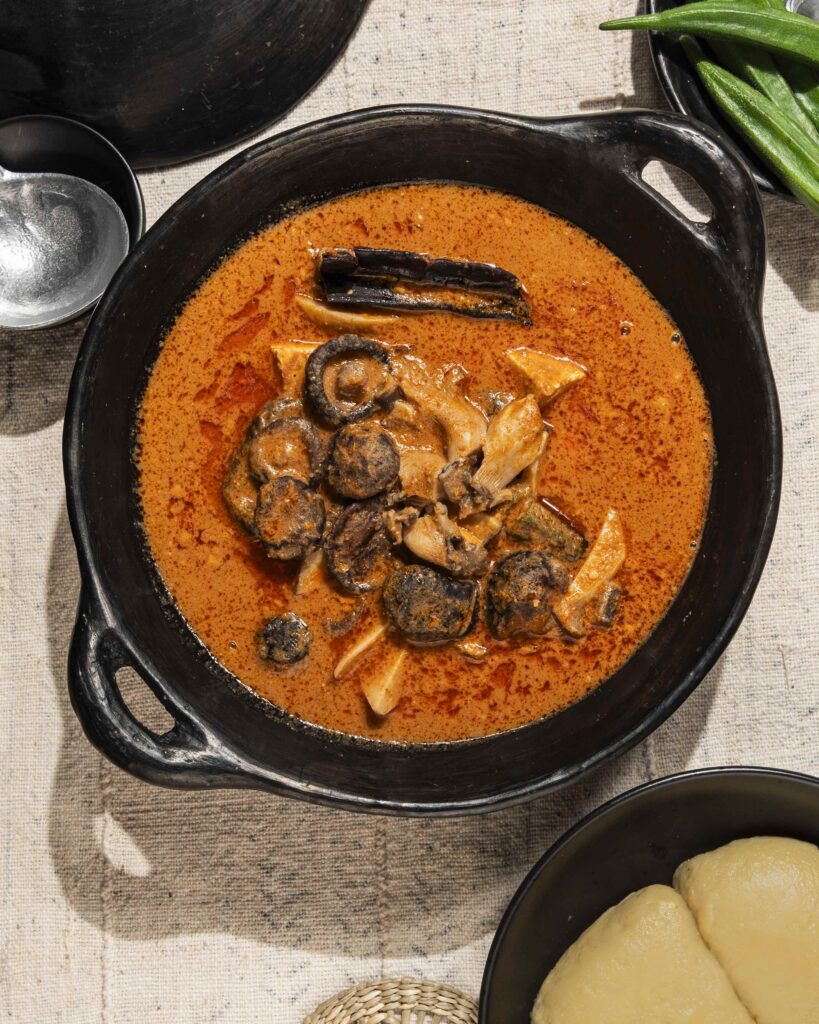
Groundnut soup. Photo: Courtesy of Penguin Random House
How did you build upon what you already knew to deepen your understanding of Ghana and West Africa’s history, geography and culture?
As an academic, I have been trained not only to ask many questions but also to use diverse sources to inform my understanding of a topic. As I have spent more time learning about my culture, I also recognized that cultural practices, including food, are captured in diverse mediums—proverbs, fabrics, motifs, and language, etc. Therefore, it was essential for me to travel across Ghana to gather these extra sources of information. I made sure to drive to as many places as I could because the changing terrain said something about the food people ate. I travelled during different seasons, as food preparation is very seasonal in Ghana. I made sure to ask many questions, stay with different people, and look beyond words when it came to capturing food history and culture. In the book, I reference certain proverbs in Ghanaian languages that speak to the importance of certain ingredients. I talk about funeral traditions and include specific food-based motifs (adinkra symbols) that also capture important ingredients. These were the additional mediums I needed to consider when I was learning about Ghanaian food and culture, and it was only really possible to explore this to the fullest by traveling across the country.
It seems that in the process of teaching others about your culture, you developed an even deeper connection to your own roots. Was there anything new you discovered that surprised you?
I think two things happened at the same time. First, for some of the foods I had a brief introduction to, I gained a much deeper understanding and respect for these ingredients. I was floored by the amount of science that goes into a lot of our ingredients, such as the fermented locust beans. Given the context in which it is made, some people may not immediately equate it to a complex application of chemistry, but it really is. Secondly, I think I had some understanding of the diversity of Northern Ghanaian cooking traditions, but to see a lot of it for myself was truly amazing. The diversity is something I could never have understood without visiting, and especially the resourcefulness of various communities given the seasonality of food.
What was the most difficult part of creating this book?
Translating a lot of unspoken context into English. Ghanaian cultures share knowledge in mediums that are not written language, and this knowledge is intricately tied to our world views. Not only am I trying to translate context that is not typically expressed in writing, but also translate information based on very different values of food. This was incredibly challenging for the “Edible Spoon” section because, in reality, we do not see this as a category of food; each one stands on its own. Additional difficulty comes from the fact that different Ghanaian cultures have their own naming structures (Gurune peoples label their foundational edible spoons as sargbo, millet ball is zeh sargbo, rice ball is mouin sargbo, etc.) Ewes label specific types of edible spoons based on major ingredients like corn or cassava, and some ethnic groups only really have fufu as their essential edible spoon. When one has to consider this diversity and try to condense it into one cohesive category, it proves very challenging. This is why I usually encourage people to really try and go into Ghanaian cooking with as much of an open mind as possible because a lot of the context does not directly translate to the Western perspective of cooking.
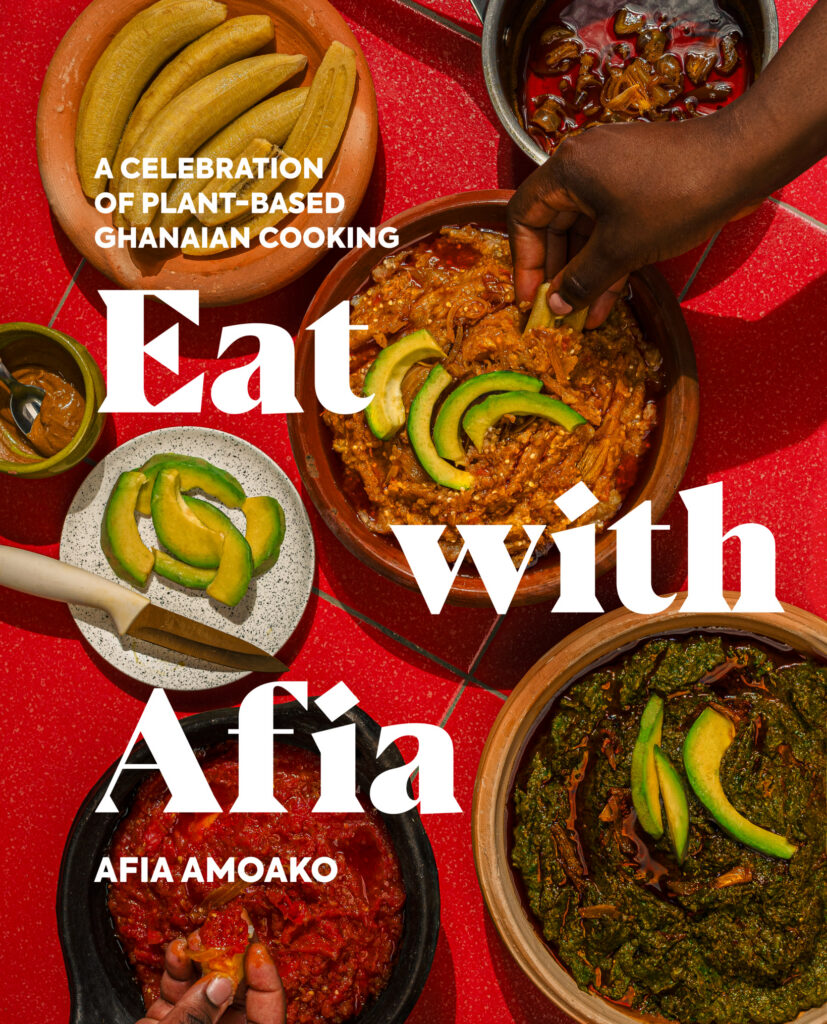
Photo: Courtesy of Penguin Random House.
And additional challenges?
How to describe the cooking process and textures one should be looking for. I settled on the term “kneading” to describe how one should cook the edible spoons because the direct translation from Twi to English is to “drive.” The final textures are challenging to translate to English, where words like soft, supple, sticky, and starchy are employed as decent adjectives but might not fully capture the textures. This whole section was challenging, but I am proud of the final iteration, as the challenge made clear what I needed to really explain for this chapter to be accessible for readers.
Tell us about the most rewarding part of the process?
It has to be the immense amount of knowledge I gained from this experience; knowledge that would not have been possible without the connections I was able to build by working on this project. Many people opened their homes to me, opened their farms to me, shared meals with me, and I truly wanted to capture how communal our culture is. I think that in integrating these experiences through the recipes, the reward for me was the opportunity to make all these people proud of their beautiful cultures and culinary traditions.
In addition to the career you’ve built through your brand, you’re also a researcher in training pursuing a PhD in Epidemiology. How has your education helped you create your cookbook?
The PhD has been instrumental in the way I think about, plan, produce, and sharing any information about food. Training to be a researcher always encourages you to ask questions and build upon your knowledge continuously. This approach to learning was important for this cookbook process because it kept me organized, but also informed the ways in which I approached each recipe, from the planning stage to the final text. I wanted people to also see the foundations of recipes, from ingredients to food processing, along with cultural anecdotes to build a fuller picture of each recipe. That is exactly what I did with my doctoral work, and it is something I try to do with every recipe.
Your discussion of Item 13 and the beautiful Akan proverb you share inspired this question. As I’ve been interviewing and writing about different cultures, I’ve really enjoyed learning about the different sayings and rituals people say before starting a meal. My family says grace/blesses a meal. Does your family have a common saying or proverb before eating?
Yes, we do. In Akan households, if a person is eating and there are others in the room, the courteous thing to say is “you are invited,” but the Akan phrase is “me nsa aka,” which translates to “my hands have received the food.” It is not actually a proverb but an invitation to share a meal. The response one gives is “me nsa womu,” which means my hands are also in the food. It speaks to the communal nature of eating, and many meals are typically eaten from the same bowl.
Beyond creating a cookbook that readers can enjoy, what does this book mean to you? And your family?
The book really does signify an important milestone for me. While the publication of a book signifies the end of a writing journey, for me it truly signifies the beginning. These recipes are just the tip of the iceberg and I look forward to digging deeper into traditional ingredients and lesser-known recipes. I have been very clear that this project would not have been possible without my community. I am incredibly blessed to have such a supportive family who came along with me throughout this process. My mum travelled with me to the Volta region for further research and worked with me to fine-tune some of the recipes, adding more details that I did not know about. This cookbook has really deepened our relationship as a family, as it provides us with something to look to as a testament to how much we have been able to carry our culture, even though we have spent most of our time traversing across the world.
What do you hope the historical impact is for generations to come?
I am especially hopeful about the impact of my cookbook. One that can serve as a resource for many first-and second-generation Ghanaians in the diaspora as we continue to explore our cultural heritage. Many people refer to the adinkra symbol “sankofa” in a situation like this, which translates to “to go back and take” or is better understood as an encouragement to reach back, whether it is learning from the past or returning to your roots. I think a book like this aptly exemplifies the sankofa spirit.
How are you celebrating, and what’s next?
I am going to be celebrating with my family and hope to plan a few events around the book in Ghana. Beyond that, I look forward to graduating this fall and exploring more about Ghanaian cooking, as there is always more to learn.
AUTHOR

Allanah Dykes is a freelance writer whose niche is home decor and food, but she has written in almost every field from mental health to political op-eds. Her favorite pastimes are listening to Biggie and Bach and enjoying New York Italian ices and slices

NEXT ON THE DISH