Many U.S. coffee chains are focused solely on the bottom line: grab-and-go food, efficient drive-throughs, and identical, cookie-cutter locations. Nashville-based Frothy Monkey has taken a different approach, prioritizing quality ingredients, unique spaces, and authentic relationships with customers and vendors.
Frothy Monkey opened in 2004 in a repurposed bungalow in Nashville’s 12South neighborhood. Current co-owner and managing partner Ryan Pruitt joined the staff as a barista in 2006, eventually becoming general manager and then purchasing the coffee shop in 2011 with co-owners including operating partners Chef Chase Ingallas, Jennifer Sheets, and Ryan Moloney.
“[Ryan Pruitt] had a vision for where this cafe could go, and it kind of grew along with his vision,” says Jennifer Sheets, Frothy Monkey’s marketing and creative director and co-owner. “We were inspired by cafes in Europe where you can go at any time of day and get a glass of wine or coffee. It’s casual, but you get really great food and drinks.”
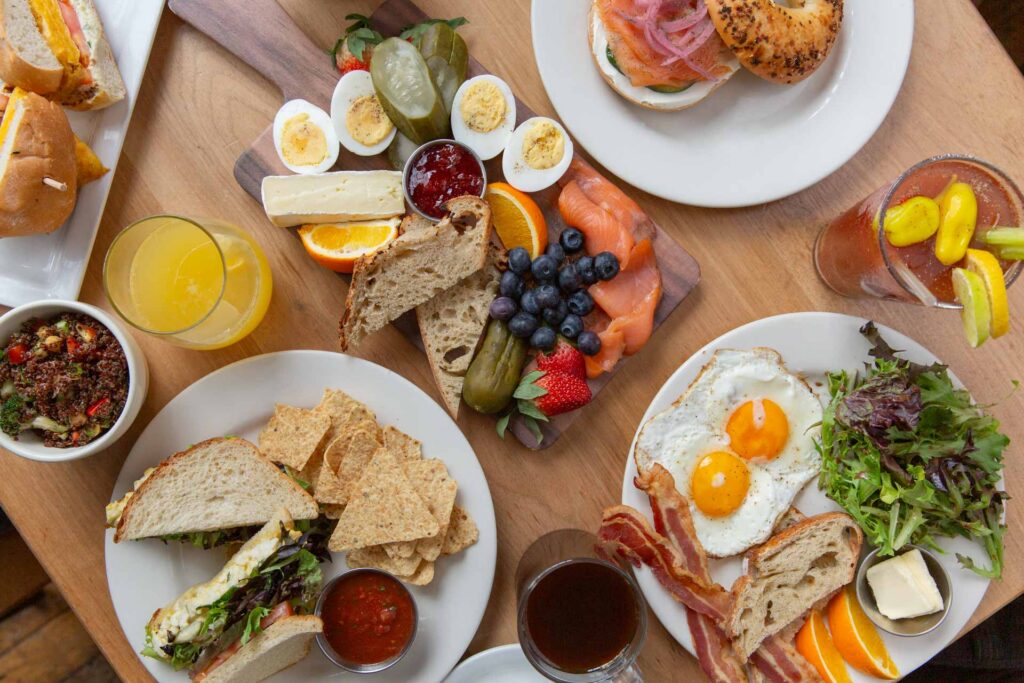
Today, Frothy Monkey has eight locations in the Nashville, Chattanooga, and Birmingham metro areas. Sheets describes the restaurants as “all day cafes,” with the same menu of breakfast, lunch, and dinner options available all day long, as well as a full bar and a robust lineup of coffee drinks. Some items are inspired by the chain’s Southern roots, like the banana pudding-flavored cold brew, shrimp and grits, and mini biscuit board served with a variety of spreads. Other specialties fuse Southern cuisine with global influences, such as the loaded biscuits with gravy made with local chorizo. Vegan sausage is also sourced locally, and the quinoa and black bean burger patties are made in-house.
“I think the biggest thing that sets us apart is quality,” says Sheets. “We’re very intentional about what we do, whether it be the menu, benefits for our staff, or the wallpaper we put on the walls.”
Coffee is ethically sourced and roasted in-house at Frothy Monkey’s Nashville roastery. Ingredients including eggs, milk, and pasta are sourced locally or regionally, often from a single vendor. “I wouldn’t call us control freaks, but maybe a little bit,” Sheets says with a laugh. “[With eggs,] because we serve so many, we wanted to make sure that we knew where they were coming from. And so we found a farm in Kentucky who could supply eggs and grow their farm with us as we expanded. We actually use that one farm for all our eggs. It’s kind of like when you have a coffee from a single farm or region, you know where it’s coming from and get to know the farmers.”
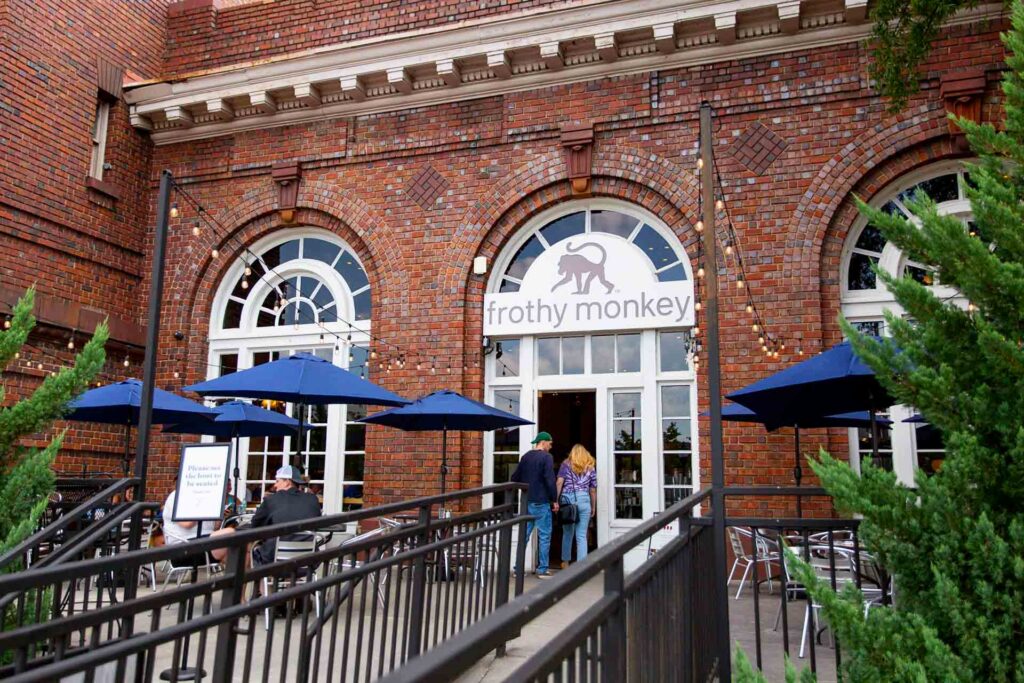
Frothy Monkey in Chattanooga, Tennessee.
As Frothy Monkey has expanded, the cafes have maintained a unique, local feel, in part due to their locations in repurposed buildings including a historic train station, former department store, and a redeveloped hosiery factory. Sheets notes that historic preservation is an important company value, and it also offers an opportunity to transform certain spaces with a painful history. For example, the Chattanooga location is in the train station’s former segregated colored waiting room.
“We have turned some of these spaces into places where everybody belongs and everybody is welcome,” says Sheets. “It’s a huge part of what we do.”
“One of our mantras is ‘Take care of each other’” she continues. “That grew out of COVID…It was our people taking care of us more than us taking care of them that really made us realize that that’s the core of everything we do. So that’s printed at our cafes, it’s on our coffee sleeves, it’s on our menus—just as a reminder.”
AUTHOR

Stacy Brooks is a Minneapolis-based freelance journalist focusing on food and travel. Her writing has been published in Hemispheres, Midwest Living and Wine Enthusiast, and she blogs at Tangled Up In Food.

NEXT ON THE DISH