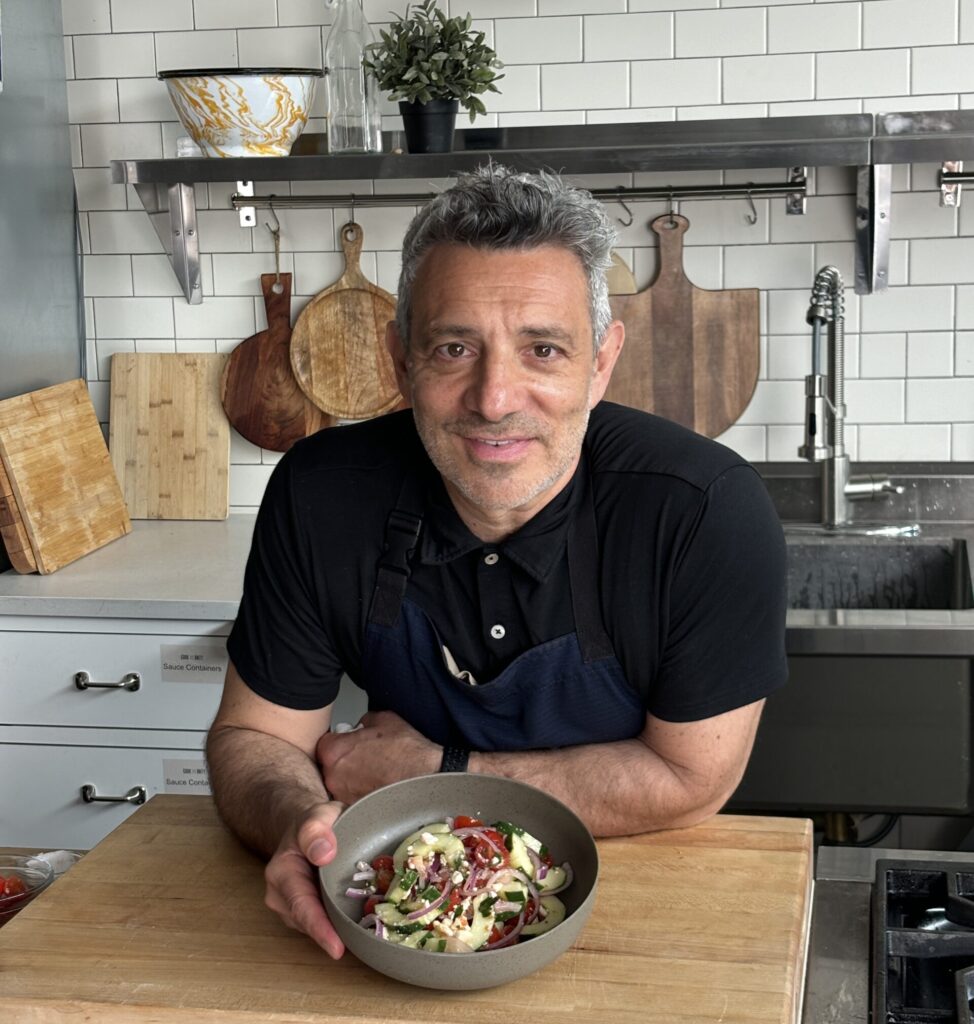
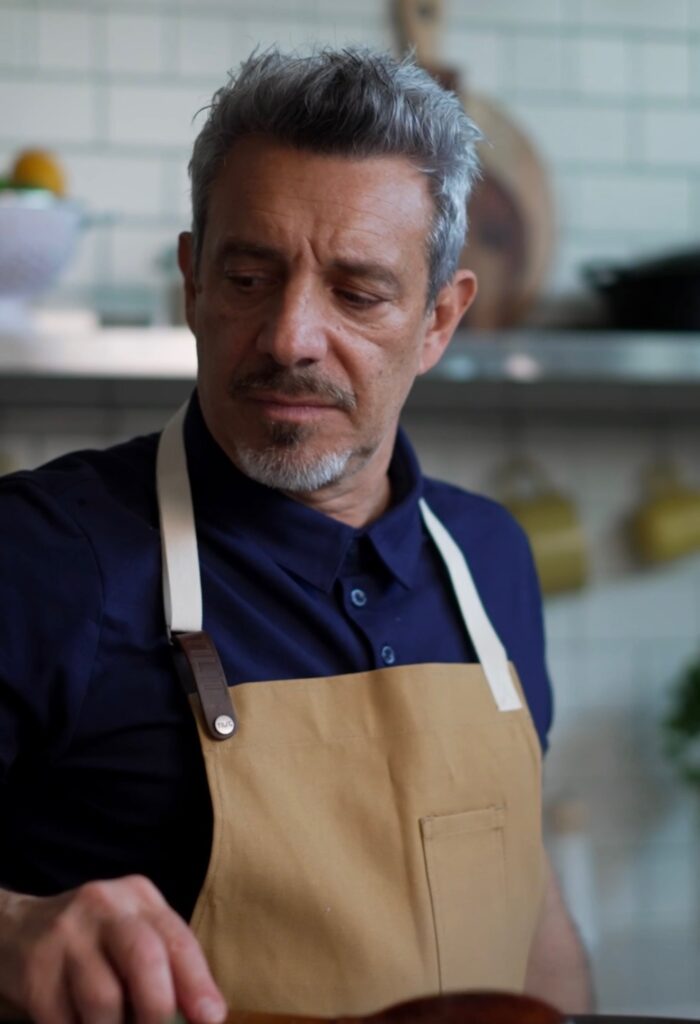
There are countless chefs in New York City. Hundreds of restaurants open and close daily in the Big Apple. To make it here as a chef is a tough order. To launch a restaurant that stands the test of time is a herculean task. John DeLucie stands among the few who have done both, to great success. His name as a chef and restaurateur is tied to some of Manhattan’s most iconic establishments. Waverly Inn, The Lion, Empire Diner, to name a few. To have been at the helm of some of the city’s buzziest spots at a time when restaurants were the heartbeat of the city that never sleeps demands perfection at all times, DeLucie has some savory stories. His memoir, The Hunger: A Memoir of an Accidental Chef (HarperCollins, 2009), captured plenty of them. But today, DeLucie writes a new chapter for himself, one that includes a successful partnership with CookUnity, and an exciting new restaurant project he’s launching in Manhattan’s Hudson Yards. The chef and native New Yorker (circa Long Island and Brooklyn) spoke with Beyondish and shared what he thinks it takes to make it in the ultra-tough business that is food.
In a recent interview I read that you first began cooking with your grandmother who is from Puglia, Italy. Is this where your passion for cooking began?
Yes, I can still smell the spaghetti and olive oil. It’s something that was just deeply ingrained in me. My grandfather had fruit and vegetable stores. As a kid I remember climbing the wooden lettuce boxes, so I was surrounded by all these fresh ingredients at a young age. We lived with my grandparents in Brooklyn in the early years, so my grandfather would bring home Broccoli Raab, swiss chard, dandelion; things that weren’t necessarily commonplace in the late ‘60s. I remember my mother would put these things in my lunchbox and kids would look at me strangely and ask what I was eating. So I was very interested in Italian food at a really young age. It’s where I found the camaraderie–in the kitchen first with my family and then in the kitchen when I started my professional career. I love that aspect of it.
It’s one thing to have a passion for cooking. But it takes grit to quit your daydream, study cooking in Europe, and then create a career for yourself in New York City, like you did.
Well, if I had listened to anybody or listened to myself rationally when I made that decision I never would have done it. But I was just so unhappy in doing what I was doing. And I thought to myself that I shouldn’t be this unhappy. So I should do something else. I was still young enough to do that and luckily it panned out. I had some background and I just needed to transfer the skills. The hard work and kitchen grunt work sounded exhilarating to me. It sounded better than sitting in a fluorescent-lit office cubicle all day on the phone. I was open and ready to do any and all of it. I grew up mowing lawns to make a buck, so getting back to the physical labor was something I enjoyed.
What would your words of advice be today for someone who said they had the same dream and wanted to quit their job and become a chef?
I’d tell that 29-year-old what they’re going to be up against. And let them know they’ve got to be ready to keep going when you get knocked down four pegs every six months. I’d also recommend that they go to Europe first to see where it’s done best. It’s all about the legacy and the real traditions you’ll learn firsthand there. Learning the discipline is crucial. Then you can come back home and do anything. But get ready to be knocked down and get back up.
You were really instrumental at a time in New York City when the dining scene took over nightlife and the see-and-be-seen culture.
Yes, restaurants sort of replaced nightclubs for a certain type at a certain age and we were right in the middle of it all. It was really exciting and fun. I had a few celebrity-packed restaurants that I took a lot of heat for as not being serious. And I’ve been serious about my craft for a long time. It felt great though because you were in the middle of everything. It’s fun to cook for famous people, at least for me. Being someone who is interested in music and pop culture, I got to see a lot of my heroes. There was someone named Christopher Cross who was really successful at the time as a singer-songwriter. He was sitting in the dining room by himself one night and I went over and introduced myself. He was shocked to know that I knew who he was. It was a fun moment! I thrive on that kind of thing.
What are your thoughts on people jumping into the restaurant business who might not have a background in it?
I can walk by a restaurant and tell you whether it will make it or fail. It’s a sexy business. Everyone wants to be Rhett Butler and wear that white jacket. It’s not for everyone. It can be an extension of your life. It’s a scene and your restaurant can do wonders for your social life. From the outside, for someone who doesn’t know what the inside of that looks like, it looks fun. But it’s tedious. You have to be all-in to really succeed in this business. The best restaurateurs, like Keith McNally at Balthazar and Minetta Tavern, Steven Starr, Jean-Georges Vongerichten, they’re all there. At all hours. They’re tough guys who can hack it. Steve Hanson was a mentor of mine. He was relentless. He noticed every detail. He knew everyone’s job better than they knew their own job. And that’s what it takes.
You’ve had some well-known hot spots. What do you think makes a restaurant iconic?
I think it’s a combination of things. It’s the people that go there, the hospitality it extends. It’s a certain dish they’ve been serving for years. Time is the real thing. Longevity is not easy in this business. And the restaurants that have stood the test of time are iconic. It does come down to hospitality at its core. It’s the way a restaurant makes you feel when you’re there. Treat people in a way that is unforgettable.
When you have a night out, what does that look like? I’d ideally eat Italian food. I’d go to a place where the waiter isn’t constantly filling my water glass. I like service to be invisible. I want to just sit and relax with my wife and enjoy the night.
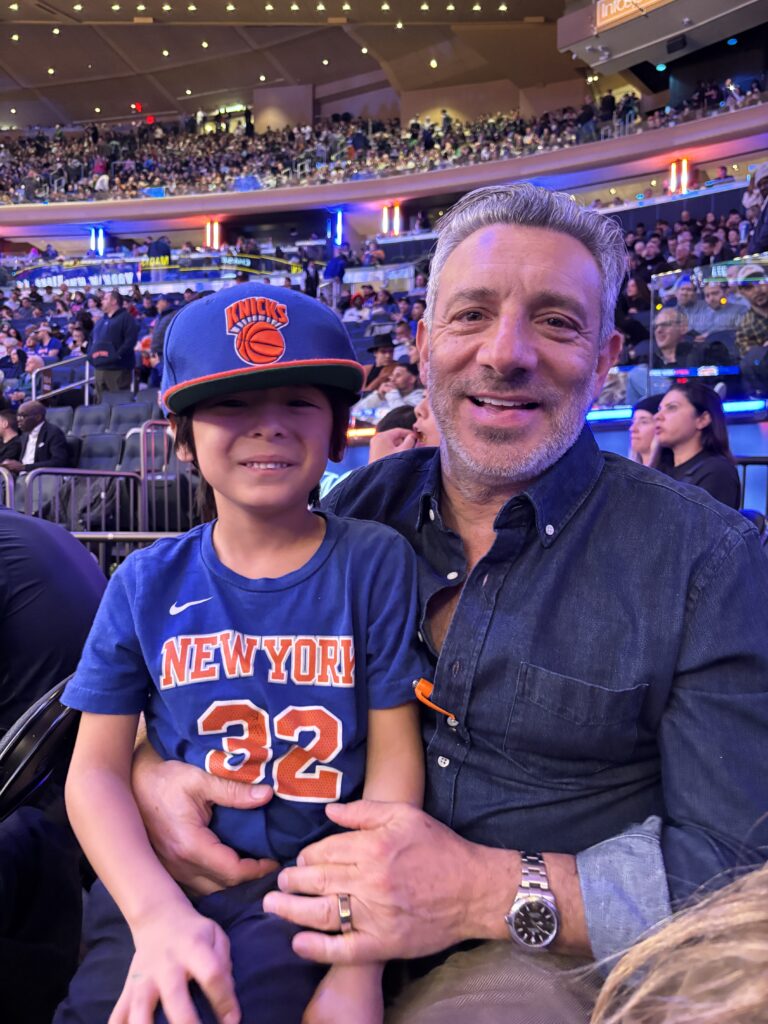
What is your go-to meal to cook at home? My son is seven and he likes to eat steak. So we eat a lot of steak. We’re pretty simple people at home. My wife is a good cook too.
You have a new substack. What are you serving up there? I had written a book called The Hunger several years ago and I’ve been dabbling in some writing here and there. I thought I could try some ideas on Substack and see if anyone is interested. If not, I’ll move on. Does anyone care? Ha.
Tell us about your partnership with CookUnity, the chef collective that really breaks the model. You seem very excited about this.
Covid had hit and at that point I had Empire Diner and Bedford & Company. I’d just closed the Lion. We were all wondering what the hell we were going to do. Sitting at home with a two-year-old was nuts. So a friend of mine who was a partner in a restaurant that was on the CookUnity platform convinced me to look into it. I had my doubts, but I decided to jump in. I did 4-5 meals on the platform at first. And it just grew from there. Five years later we’ve done over 30,000 meals. I didn’t initially recognize the opportunity. And now we’re expanding into other markets. The difference between CookUnity and other platforms out there for meal delivery is that it’s chef-driven. There’s a difference in expectation and quality. We’re reviewed continuously. We’re a top seller. We’re expected to deliver quality meals. It’s been a really great gift.
What is CookUnity’s Food Passport program? You recently went to Greece. Can you tell us about that?
We’ve done Rome and Athens so far. It’s about giving customers a real, authentic taste of those places. It’s about learning about the food, culture and history behind a dish. It creates such great feelings all around. We’ll probably do another location soon.
Going back to the pandemic, that obviously devastated the restaurant community. What do you think made the difference between making it and not? The ability to pivot was key. Many restaurants didn’t know what to do and weren’t willing to try new things. When you get into survival mode, all bets are off. It’s real Darwinian, but only the strong survive. Those that were able to think outside the box and do anything they could to survive were the ones to survive. It took guts and creativity to make it.
What are you excited about right now?
I’m excited to open new markets with CookUnity. And there’s also this new project in Hudson Yards. It’s going to be Italian. It’s coming together this year. There’s a lot to still be figured out. I’m hitting the gym everyday to get in shape for it. It’s a lot of working opening a large restaurant. I’ll need my stamina. It’s in a beautiful hotel and it’s a big project.
If you had the chance to cook one meal for one person, who would that be and what would you serve?
I’d make linguine with clam sauce for Jimi Hendrix.
AUTHOR

Elizabeth Hazard is a writer, producer and photography editor. Her work has appeared in various publications and she writes frequently about art, culture, fashion and history.

NEXT ON THE DISH